
Blog
Bacteriostatic Water — What UK Researchers Need to Know
Published May 5, 2026
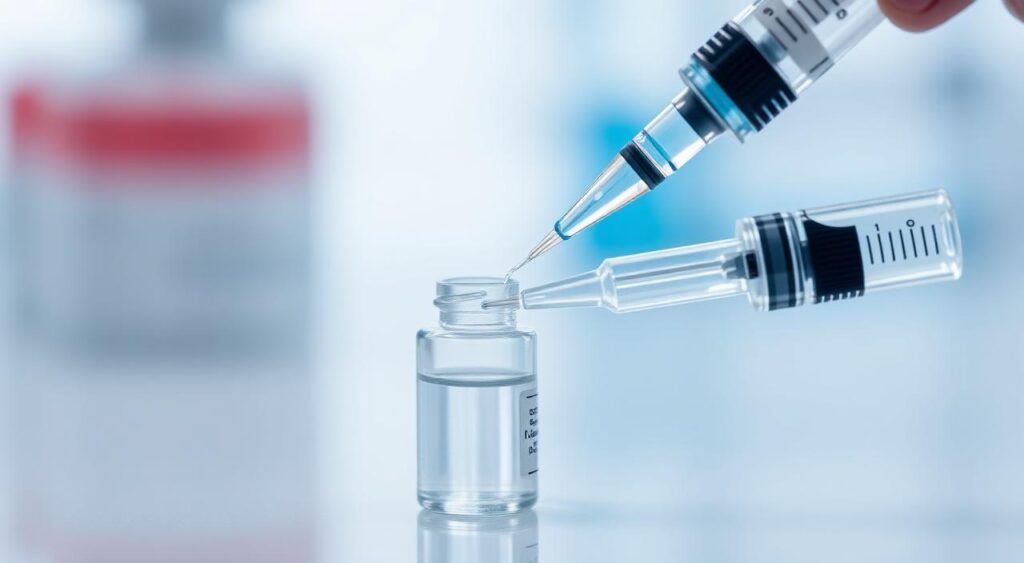
In the exacting domain of laboratory peptide research, the solvent used to reconstitute lyophilised compounds is as critical as the peptide itself. Bacteriostatic water serves as the primary diluent for multi-use vials, providing a sterile environment that inhibits the proliferation of potential contaminants. Unlike standard sterile water, which is designed for single-use applications, bacteriostatic water contains a specific preservative that allows researchers to maintain the integrity of a solution over several weeks. For UK-based researchers, understanding the pharmaceutical composition and logistical handling of this solvent is essential for ensuring reproducible results and preventing the degradation of sensitive biochemical sequences.
The standard formulation for bacteriostatic water consists of highly purified, sterile water for injection, supplemented with 0.9% (9 mg/mL) benzyl alcohol. This additive acts as a bacteriostatic agent, meaning it does not necessarily kill existing bacteria but prevents them from reproducing or “colonising” the solution. When a researcher punctures a vial with a needle, the risk of introducing airborne particulates or microscopic organisms is ever-present. The benzyl alcohol ensures that any accidental introduction of bacteria does not result in a compromised sample. Within the UK scientific community, sourcing high-quality, lyophilised peptides from reputable suppliers like UK Peptide Store necessitates an equally high standard of reconstitution media to ensure experimental success.
Composition and Chemical Properties of Bacteriostatic Water
Bacteriostatic water is a preparation of sterile water for injection that contains 0.9% benzyl alcohol as a preservative. This specific concentration is the industry standard, balanced to provide maximum antimicrobial efficacy without interfering with the molecular structure of most synthetic peptides. The pH of the solution is typically adjusted to approximately 5.7 (within a range of 4.5 to 7.0), making it slightly acidic. This acidity is often beneficial for the stability of certain peptide chains, which may be prone to deamidation or oxidation in more alkaline environments.
The Role of Benzyl Alcohol
Benzyl alcohol (C7H8O) is an aromatic alcohol with a mild, pleasant odour. Its primary function in research water is to serve as a bacteriostatic preservative. It disrupts the cellular membranes of gram-positive and gram-negative bacteria, effectively halting metabolic processes required for replication. However, researchers must be aware that benzyl alcohol is not a universal sterilant; it cannot eliminate high concentrations of pathogens if the initial solution or the tools used are grossly contaminated. It is merely a secondary line of defence in an aseptic laboratory environment.
Physical Characteristics
The fluid is clear, colourless, and odourless to the naked eye, though scientists may occasionally note a faint chemical scent upon opening a fresh vial. It possesses a viscosity nearly identical to pure water, ensuring that it can be easily drawn into fine-gauge insulin syringes (U-100) and precisely measured. For UK laboratories, it is vital to ensure that the water used is specifically labeled as “Bacteriostatic Water for Injection, USP” or the equivalent BP (British Pharmacopoeia) standard where available, although the 0.9% benzyl alcohol formulation remains the global research gold standard.
Bacteriostatic Water vs Sterile Water: The Critical Differences
A common error in novice peptide research is the conflation of sterile water with bacteriostatic water. While both appear identical, their applications in the lab are vastly different. Sterile water is purified and sterilised but contains no preservative. Once a vial of sterile water is opened or punctured, it has no defence against bacterial ingress. In a research setting, sterile water is generally used for “single-shot” experiments where the entire volume is consumed immediately. If a reconstituted peptide is meant to be stored in a refrigerator for multiple days or weeks, sterile water is inappropriate as it becomes a breeding ground for bacteria within 24 to 48 hours.
Bacteriostatic water, by contrast, is designed for multi-dose vials. The inclusion of benzyl alcohol allows the researcher to draw multiple aliquots from the same vial over a period of approximately 28 days. This is particularly relevant when working with compounds such as BPC-157 or TB-500, where a single 5mg or 10mg vial may be intended for several distinct laboratory tests over a month-long period. Using the wrong solvent can lead to the rapid degradation of these expensive research materials, potentially skewing data or rendering the peptide inert.
Legal Status and Sourcing in the UK
In the United Kingdom, the acquisition of laboratory supplies is governed by specific regulations. Researchers often ask, are peptides and their solvents legal for research? Generally, peptides and bacteriostatic water are legal to purchase and possess for legitimate laboratory and scientific research. They are not intended for human consumption or as medicinal products. For a detailed breakdown of the regulatory landscape in Britain, researchers can consult our guide on peptides legality in the UK.
When sourcing bacteriostatic water in GBP, it is important to avoid “grey market” sellers who may supply non-sterile or incorrectly balanced solutions. Reliable UK suppliers often provide bacteriostatic water alongside peptides to ensure researchers have access to pharmaceutical-grade diluents. Shipments are typically handled via Royal Mail Tracked services to ensure prompt delivery, as maintaining a consistent supply chain is vital for ongoing longitudinal studies. It should be noted that the MHRA (Medicines and Healthcare products Regulatory Agency) oversees the distribution of medical-grade water, but laboratory-grade bacteriostatic water remains accessible for scientific advancement.
Reconstitution Mathematics: A Worked Example
Precision is the cornerstone of peptide research. Once a researcher has their lyophilised peptide vial and their bacteriostatic water, they must calculate the resulting concentration. Over-diluting or under-diluting a sample can lead to experimental failure. To assist with these calculations, many researchers use a peptide reconstitution calculator, but understanding the manual maths is equally important.
The Scenario
A researcher has a vial containing 5mg (5,000mcg) of a peptide (for example, Semaglutide or Tirzepatide). The objective is to achieve a dose of 250mcg per laboratory test aliquot using a standard 1ml (U-100) insulin syringe.
- Determine Solvent Volume: The researcher decides to add 2ml of bacteriostatic water to the 5mg vial.
- Calculate Total Micrograms: 5mg = 5,000mcg.
- Calculate Concentration: 5,000mcg / 2ml = 2,500mcg per ml.
- Determine Syringe Units: A 1ml syringe has 100 units. Therefore, 1ml (2,500mcg) = 100 units.
- Calculate Units for Target Dose: To find the number of units for a 250mcg dose: (250mcg / 2,500mcg) * 100 units = 10 units.
In this example, drawing the solution to the 10-unit mark on a U-100 syringe will provide exactly 250mcg of the peptide. This methodical approach ensures that the limited supply of bacteriostatic water is used efficiently and that the experimental parameters remain constant throughout the study.
Storage, Shelf Life, and Handling
Proper storage of bacteriostatic water is essential to maintain its efficacy. Before the vial is punctured, it should be stored in a cool, dry place away from direct sunlight, ideally between 15°C and 30°C. In the temperate UK climate, room temperature is usually sufficient, provided the storage area is not subject to extreme fluctuations. Once the vial is “broken” (the stopper is punctured), the shelf life officially begins. Most manufacturers and laboratory protocols recommend discarding the vial after 28 days of use.
Refrigeration Requirements
While unmixed bacteriostatic water does not strictly require refrigeration, it is standard practice to store reconstituted peptides in a laboratory refrigerator at 2°C to 8°C. This cold storage helps preserve the delicate peptide bonds and works in tandem with the benzyl alcohol to inhibit microbial growth. Researchers should never freeze bacteriostatic water, as the expansion of the water can cause micro-fractures in the glass vial or cause the benzyl alcohol to precipitate out of the solution, potentially altering its preservative properties.
Aseptic Technique
Even with the presence of a preservative, aseptic technique must be strictly followed. This includes:
- Wiping the rubber stopper of both the water vial and the peptide vial with 70% isopropyl alcohol swabs before every puncture.
- Using a fresh, sterile needle for every withdrawal.
- Ensuring the laboratory environment is free from excessive airflow that could introduce contaminants.
- Monitoring the solution for change in colour or clarity; if the water becomes cloudy or shows visible particulates, it must be discarded immediately.
Potential Limitations and Sensitivities
While bacteriostatic water is the standard, it is not suitable for every research application. In specific in vitro studies involving extremely sensitive primary cell cultures, 0.9% benzyl alcohol may exhibit cytotoxic effects. In these niche cases, researchers must use sterile water for injection and accept the much shorter window of stability (effectively necessitating immediate use). Furthermore, some peptides may have specific solubility requirements that require a different pH or the addition of a buffer like Phosphate-Buffered Saline (PBS).
In the context of research involving GHK-Cu or Epitalon, bacteriostatic water is generally the preferred choice due to the long-term nature of the protocols associated with these compounds. However, researchers should always consult the specific Certificate of Analysis (CoA) for their peptide to ensure no contraindications exist with benzyl alcohol. For instance, some extremely large or complex proteins can be “salted out” or denatured by alcohols, though this is rare with the shorter synthetic peptides typically used in contemporary research.
Why UK Researchers Choose Quality Sources
The reliability of data is only as strong as its weakest variable. Using inferior, non-verified water can introduce ‘noise’ into an experiment, leading to false negatives or unexpected biochemical reactions. UK researchers often face challenges with international shipping, customs delays, and the risk of receiving degraded products when ordering from overseas. By sourcing supplies within the UK, laboratories can ensure that the bacteriostatic water has been stored and transported under controlled conditions.
Furthermore, sourcing within the UK supports the local scientific ecosystem and ensures compliance with British laboratory standards. Whether investigating the mitochondrial effects of MOTS-c or the growth hormone secretagogue properties of Sermorelin, the foundation of the study begins with the purity of the diluent. Bacteriostatic water remains the unsung hero of the laboratory, providing the stability and safety required to push the boundaries of modern peptide science.
Frequently Asked Questions
Can I use bacteriostatic water with any peptide?
Most synthetic research peptides are compatible with 0.9% bacteriostatic water. However, some highly sensitive proteins or specific cell culture experiments may be sensitive to benzyl alcohol. Always check the peptide’s solubility profile. For compounds like Retatrutide or Tesamorelin, bacteriostatic water is standard for multi-use research vials.
How long does a vial of bacteriostatic water last after opening?
The industry standard for a punctured vial of bacteriostatic water is 28 days. After this period, the effectiveness of the benzyl alcohol as a preservative may diminish, and the risk of microbial contamination increases. It is best practice to label the vial with the date of first puncture.
Is bacteriostatic water the same as saline?
No. Bacteriostatic saline contains 0.9% sodium chloride (salt) in addition to benzyl alcohol. Bacteriostatic water is simply sterile water with 0.9% benzyl alcohol. While saline is used in some medical contexts, bacteriostatic water is the standard diluent for the majority of lyophilised peptide research to avoid unintended reactions with the salt content.
What should I do if my bacteriostatic water arrives frozen?
In the UK winter, Royal Mail deliveries can occasionally be exposed to freezing temperatures. If your bacteriostatic water arrives frozen, it is generally recommended to discard it. Freezing can compromise the vial’s integrity and cause the benzyl alcohol to separate or behave unpredictably, which may interfere with the concentration and stability of your research peptides.
Disclaimer: All products mentioned, including bacteriostatic water and peptides, are strictly for laboratory research use only. They are not for human or animal consumption and should only be handled by qualified professionals in a controlled environment.