
Blog
How to Reconstitute Peptides — A UK Researcher Guide
Published May 5, 2026

The field of peptide research in the United Kingdom has expanded significantly in recent years, with laboratories investigating various synthesised amino acid chains for potential physiological effects. However, most highly purified peptides, such as research-grade compounds available in the UK, are supplied in a lyophilised (freeze-dried) state. This process removes moisture to ensure long-term stability and shelf life during transit, particularly when handled by domestic couriers like Royal Mail. For a researcher to utilise these compounds in an in vitro or animal model, they must first undergo reconstitution—the process of returning a solid powder to a liquid state using a sterile diluent.
Mastering the technical nuances of reconstitution is paramount for ensuring the integrity of the peptide and the accuracy of the experimental data. Incorrect techniques, such as the use of inappropriate diluents, vigorous agitation, or flawed mathematical calculations, can denature the delicate peptide bonds, rendering the sample useless for scientific inquiry. In the UK regulatory landscape, these substances are strictly for laboratory research use only and are not for human consumption. Following precise protocols is not merely a matter of efficiency but a foundational requirement for reproducible science within the UK biochemistry community.
The Essential Components for Peptide Reconstitution
Before any laboratory procedure begins, a UK researcher must ensure they have a sterile environment and the necessary consumables. Most high-quality peptides, such as BPC-157 or TB-500, arrive in vacuum-sealed glass vials with a flip-off plastic cap. To translate these from powder to liquid, the following items are typically required:
- Bacteriostatic Water (BAC): This is the standard diluent for peptide research. It consists of sterile water containing 0.9% benzyl alcohol, which acts as a preservative to inhibit the growth of bacteria, allowing the solution to remain stable for multiple withdrawals over a period of up to 28 days if refrigerated.
- Sterile Syringes: Two types are usually employed. A larger 3ml or 5ml syringe is often used for transferring the BAC water into the peptide vial, while U-100 insulin syringes (calibrated in 100 units per 1ml) are used for precise measurement of the final solution.
- Alcohol Prep Pads: 70% isopropyl alcohol wipes are essential for sanitisation of the vial stoppers to prevent cross-contamination.
- Sharps Bin: All needles must be disposed of according to UK health and safety regulations regarding biohazardous waste.
It is worth noting that while sterile saline can be used for some applications, it does not contain a preservative. Therefore, saline-reconstituted peptides must be used immediately or discarded, making BAC water the preferred choice for most British longitudinal studies. Ensuring that your supplies are sourced from reputable UK medical exporters ensures that they meet BS EN ISO standards for laboratory equipment.
Calculating Concentrations and Microgram Dosages
Precision in mathematics is the most critical step in peptide research. Because peptides are measured in milligrams (mg) and the research doses are often in micrograms (mcg), a researcher must understand how the volume of diluent affects the concentration per ‘unit’ on a syringe. In the UK, standard U-100 syringes are the benchmark, where 100 units equal 1ml of liquid.
To determine the concentration, you divide the total milligrams of the peptide by the volume of water added. For example, if you have a 5mg vial and add 2ml of bacteriostatic water, the concentration is 2.5mg per ml. Since 1mg equals 1,000mcg, the solution contains 2,500mcg per ml. To find the amount per unit on a U-100 syringe, you divide 2,500mcg by 100 units, resulting in 25mcg per unit. For researchers who prefer an automated approach, a peptide reconstitution calculator can significantly reduce the risk of human error during these calculations.
The ‘Rule of Ten’ for Simplified Measurement
Many UK researchers utilise a ‘Rule of Ten’ to simplify their workflow. By matching the volume of water to the mass of the peptide in a specific ratio, the maths becomes intuitive. For instance, adding 1ml of water to a 2mg vial creates a concentration where each 10 units on the syringe equals 200mcg. Maintaining a standard volume across different experiments helps prevent accidental deviation from the research protocol.
A Step-by-Step Guide to the Reconstitution Process
Once the calculations are finalised and the workspace is sanitised, the physical process of reconstitution can begin. This must be performed with care, as many peptides, particularly larger proteins like Tirzepatide or Semaglutide, can be structurally fragile.
- Temperature Calibration: Remove the peptide vial from the freezer or refrigerator and allow it to reach room temperature. This prevents condensation from forming inside the vial, which can affect the stability of the lyophilised powder.
- Sanitisation: Pop off the plastic caps from both the peptide vial and the bacteriostatic water. Use a fresh alcohol wipe to clean the rubber stoppers of both vials vigorously.
- Pressure Equalisation: Draw air into your large syringe equivalent to the volume of water you intend to extract (e.g., 2ml of air for 2ml of water). Inject this air into the BAC water vial; this creates positive pressure, making it easier to withdraw the fluid.
- The Transfer: Slowly withdraw the required volume of bacteriostatic water. When transferring this to the peptide vial, do not aim the needle directly at the lyophilised powder. Instead, angle the needle so the water trickles down the inside glass wall of the vial.
- Vacuum Management: Most high-quality peptide vials are vacuum-sealed. This may cause the water to be sucked in rapidly. It is vital to control the plunger with your thumb to slow the descent, as high-pressure impact can “shear” or damage the peptide molecules.
- Dissolution: Once the water is in the vial, remove the needle. Do not shake the vial. Instead, gently swirl the vial between your fingers or rotate it slowly until the lyophilised cake is completely dissolved and the liquid is clear.
If the solution remains cloudy or contains visible particulates after several minutes of gentle swirling, this may indicate a problem with the purity of the peptide or the pH of the diluent. In such cases, the sample may be compromised and should not be used for research purposes.
Worked Example: Reconstituting a 10mg Peptide Vial
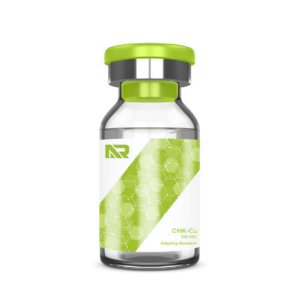
For clarity, let us examine a specific worked example that a researcher might encounter when preparing a vial for an in vivo study. Suppose you have a vial containing 10mg of a lyophilised compound, such as GHK-Cu, and your protocol requires a specific microgram concentration.
Step 1: Determine the Water Volume
The researcher decides to add 2ml of bacteriostatic water to the 10mg vial. This provides a manageable volume that is not too concentrated, yet fits easily within a standard 3ml transfer syringe.
Step 2: Calculate Total Concentration
Total mass = 10,000mcg (10mg).
Total volume = 2ml (200 units on a U-100 syringe).
Concentration per ml = 10,000mcg / 2ml = 5,000mcg/ml.
Step 3: Calculate Unit Concentration
Using a U-100 syringe (where 1ml = 100 units):
Concentration per unit = 5,000mcg / 100 units = 50mcg per unit.
Step 4: Execute the Research Dose
If the experimental protocol calls for a 250mcg dose to be administered to the subject model, the researcher would calculate:
250mcg / 50mcg per unit = 5 units.
Therefore, drawing the solution to the 5-mark point on a U-100 syringe provides the exact 250mcg required for the test.
Storage and Stability Post-Reconstitution
Stability is the primary concern once a peptide has been reconstituted. In its lyophilised form, a peptide can often survive at room temperature for weeks during transit via Royal Mail, though long-term storage should always be at -20°C. However, once the peptide is in a liquid state, its “degradation clock” begins to tick significantly faster.
In a UK laboratory setting, reconstituted peptides should be stored in a dedicated laboratory refrigerator at temperatures between 2°C and 8°C. Exposure to UV light and heat must be strictly avoided. Even with the presence of benzyl alcohol in BAC water, the primary structure of the peptide will eventually begin to break down through hydrolysis. Most peptides maintain their efficacy for 14 to 28 days under refrigeration. Researchers investigating highly sensitive compounds like MOTS-c or Sermorelin often prefer to use the solution within a shorter window to ensure maximum potency.
Furthermore, avoiding “freeze-thaw” cycles is essential. While lyophilised powder can be frozen, once reconstituted, freezing the liquid can cause ice crystals to form that may physically shear the peptide chains. If a long-term liquid study is necessary, researchers sometimes aliquot the solution into smaller, single-use sterile vials, though this is generally discouraged due to the increased risk of contamination.
Regulatory Context and Safety in the UK
It is imperative for any researcher operating within the United Kingdom to understand the legal framework governing these substances. Peptides sold for research purposes are not medicines, and they have not been evaluated by the MHRA (Medicines and Healthcare products Regulatory Agency) for human use. For a comprehensive overview of the status of these chemicals, researchers should consult the guide on are peptides legal in the UK.
From a safety perspective, reconstitution involves the use of sharps. UK laboratories must adhere to the Health and Safety at Work etc. Act 1974. This includes the use of puncture-resistant sharps containers and the avoidance of recapping needles, which is a leading cause of needle-stick injuries. Furthermore, because these compounds are for ‘laboratory research use only’, all experiments should be conducted in controlled environments with appropriate personal protective equipment (PPE), including gloves and eye protection, to prevent accidental exposure to the concentrated research material.
Advanced Considerations: pH and Peptide Sensitivity
While bacteriostatic water is the universal standard, certain peptides have unique solubility requirements. Peptides are essentially chains of amino acids with an ‘isoelectric point’—the pH at which the molecule carries no net electrical charge. If the pH of the diluent is too close to the isoelectric point, the peptide may precipitate out of the solution, appearing as “clumps” or a “snow globe” effect in the vial.
In rare instances, such as with certain sequences like KPV or specialised GHRPs, a researcher might find that the powder does not dissolve readily in BAC water. In professional settings, a minute amount of sterile acetic acid (for basic peptides) or sodium bicarbonate (for acidic peptides) might be used to slightly shift the pH and encourage dissolution. However, for the vast majority of research peptides available for purchase in GBP, standard bacteriostatic water is sufficient. If a peptide is particularly sensitive to the 0.9% benzyl alcohol content, plain sterile water for injection may be used, provided the vial is used in a single session and disposed of immediately.
Frequently Asked Questions
What happens if I accidentally shake the peptide vial?
Shaking the vial can introduce air bubbles and create foam, but more importantly, the kinetic energy can cause “denaturation” of the peptide. This means the complex three-dimensional structure of the protein is disrupted. While some small, robust peptides might survive, many will lose their biological activity. If you have shaken a vial, allow it to sit in the refrigerator for a few hours to see if the foam settles, but be aware the experimental results may be compromised.
Can I use tap water or bottled mineral water for reconstitution?
Absolutely not. Tap water and bottled water contain minerals, chlorine, and various microorganisms that will instantly degrade the peptide and could cause dangerous reactions in a research model. Only use British Pharmacopoeia (BP) grade bacteriostatic water or sterile water for injection to ensure the validity of your study and the safety of the laboratory environment.
How long can I store the lyophilised powder before adding water?
When stored in a standard freezer (-20°C), lyophilised peptides can remain stable for up to 24 months. If stored in a refrigerator (2-8°C), they are generally stable for 6 to 12 months. When kept at room temperature in a dark place, they typically remain viable for 30 to 90 days. For UK researchers, it is best practice to keep all stock in the freezer until the day of reconstitution.
Is it possible to over-dilute a peptide?
Over-dilution occurs when too much water is added, making the concentration so low that it becomes difficult to measure an accurate dose with a standard syringe. For example, adding 10ml of water to a 2mg vial would mean the research dose is spread across a very large volume of liquid, which may not be suitable for the subject model. Most researchers aim for a concentration that allows the desired dose to sit between 5 and 50 units on a U-100 syringe for maximum accuracy.